
Subtotal ₹0.00

Whether you’re establishing a new hospital, expanding a specialty clinic, or upgrading a diagnostic center, medical equipment procurement is one of the most significant investments your organization will make. The quality of your procurement decisions directly impacts patient care, operational efficiency, staff productivity, and long-term financial sustainability.
Healthcare providers in the UAE operate in a highly regulated environment where compliance, quality assurance, and technological innovation are essential. Procuring the right medical equipment is not simply about finding the lowest price—it involves evaluating clinical requirements, supplier reliability, equipment certifications, service support, maintenance contracts, and total cost of ownership.
Following proven medical equipment procurement tips helps hospitals and diagnostic centers minimize risks, avoid costly mistakes, and maximize their return on investment.
In this comprehensive guide, we’ll explore the entire procurement process—from planning and budgeting to vendor evaluation and post-installation support.
Table of Contents
- What is Medical Equipment Procurement?
- Why Procurement Matters
- Procurement Planning Process
- Assessing Equipment Requirements
- Budget Planning
- Choosing the Right Supplier
- New vs Refurbished Equipment
- Vendor Evaluation Checklist
- UAE Compliance & Certifications
- Installation & Training
- Maintenance & Warranty
- Total Cost of Ownership
- Common Procurement Mistakes
- Procurement Checklist
- Latest Procurement Trends
- FAQs
- Conclusion
What is Medical Equipment Procurement?
Medical equipment procurement is the structured process of identifying, evaluating, purchasing, installing, and maintaining healthcare equipment required by hospitals and diagnostic centers.
The procurement process covers everything from:
- Clinical requirement analysis
- Equipment selection
- Budget approval
- Vendor comparison
- Technical evaluation
- Price negotiation
- Equipment delivery
- Installation
- User training
- Preventive maintenance
An effective procurement strategy ensures hospitals receive reliable equipment that meets clinical needs while remaining compliant with UAE healthcare regulations.
Why Medical Equipment Procurement Matters
Healthcare technology evolves rapidly. Purchasing outdated or unsuitable equipment can affect patient outcomes and reduce operational efficiency.
Proper procurement provides several advantages:
Improved Patient Care
Modern imaging systems, monitoring devices, and laboratory equipment improve diagnostic accuracy and treatment planning.
Reduced Operational Costs
High-quality equipment requires fewer repairs, consumes less energy, and offers longer service life.
Regulatory Compliance
Hospitals must ensure all equipment complies with:
- UAE healthcare regulations
- CE Certification
- FDA Approval (where applicable)
- ISO Quality Standards
Better Workflow Efficiency
Advanced systems reduce waiting times and increase patient throughput.
Long-Term Investment
Medical equipment typically remains operational for 8–15 years. Careful procurement protects this long-term investment.
Medical Equipment Procurement Planning Process
Successful procurement begins long before contacting suppliers.
Hospitals should establish a structured procurement framework that includes:
Step 1: Define Clinical Objectives
Ask important questions:
- Which departments require equipment?
- What services will be offered?
- Expected patient volume?
- Future expansion plans?
- Space availability?
For example:
A hospital planning to introduce oncology services may require:
- PET-CT
- MRI
- CT Scanner
- Digital X-ray
- Ultrasound
- PACS Integration
Step 2: Form a Procurement Committee
Procurement decisions should involve multiple stakeholders.
Typical committee members include:
- Hospital Administrator
- Procurement Manager
- Radiologist
- Biomedical Engineer
- Finance Department
- IT Team
- Clinical Staff
Collaborative decision-making reduces purchasing risks.
Step 3: Market Research
Before requesting quotations:
Research:
- Available manufacturers
- Technology updates
- Supplier reputation
- Customer reviews
- Warranty terms
- Service availability
Comparing multiple suppliers helps identify the best value rather than simply the lowest price.
Assessing Equipment Requirements
Every healthcare facility has unique operational needs.
Important factors include:
Patient Volume
High-volume diagnostic centers require faster equipment capable of handling continuous workloads.
Example:
| Patient Volume | Recommended Equipment |
|---|---|
| Low | Entry-Level Systems |
| Medium | Mid-Range Equipment |
| High | Premium High-Speed Systems |
Department Requirements
Different departments require specialized equipment.
| Department | Equipment |
|---|---|
| Radiology | MRI, CT, X-ray |
| Cardiology | Cath Lab, ECG |
| ICU | Patient Monitors |
| Laboratory | Hematology Analyzer |
| Emergency | Portable Ultrasound |
Space Planning
Hospitals must verify:
- Room dimensions
- Electrical load
- HVAC requirements
- Shielding
- Structural support
- Patient accessibility
Ignoring infrastructure planning often causes installation delays.
Budget Planning for Medical Equipment Procurement
Budgeting involves more than the equipment purchase price.
Hospitals should calculate the total investment.
Include Costs Such As:
- Purchase price
- Shipping
- Customs clearance
- Installation
- Civil work
- Electrical upgrades
- Staff training
- Annual maintenance
- Software licensing
- Consumables
- Spare parts
Example Budget Breakdown
| Expense | Percentage |
|---|---|
| Equipment Purchase | 70% |
| Installation | 5% |
| Infrastructure | 7% |
| Training | 3% |
| AMC | 8% |
| Miscellaneous | 7% |
Procurement Cost Saving Tips
Hospitals can reduce procurement costs by:
- Comparing multiple quotations
- Purchasing bundled equipment
- Negotiating service contracts
- Choosing reliable refurbished systems where appropriate
- Planning purchases in advance
- Standardizing equipment brands across departments
- Leveraging long-term supplier relationships
Benefits of Strategic Procurement
Strategic procurement offers measurable advantages:
- Higher return on investment (ROI)
- Reduced equipment downtime
- Better patient satisfaction
- Enhanced diagnostic accuracy
- Lower maintenance expenses
- Improved workflow efficiency
- Easier compliance audits
- Stronger supplier partnerships
Key Takeaways
By the end of the planning and budgeting stage, your hospital should have:
- A clear list of required equipment
- Clinical justifications for each purchase
- Budget estimates
- Infrastructure assessment
- Procurement committee approval
- Supplier evaluation criteria
- Timeline for acquisition
These steps lay the foundation for a successful procurement process and help avoid costly errors later.
How to Choose the Right Medical Equipment Supplier
Selecting the right supplier is one of the most important decisions in the procurement process. A reliable supplier provides more than equipment—they offer technical expertise, installation support, maintenance services, and long-term partnerships.
Characteristics of a Reliable Medical Equipment Supplier
Look for suppliers who offer:
- Genuine medical equipment from trusted manufacturers
- Comprehensive product portfolio
- Experienced biomedical engineers
- Installation and commissioning services
- Preventive maintenance contracts
- Quick response for technical support
- Availability of spare parts
- Equipment training for healthcare staff
- Strong reputation in the UAE healthcare industry
A dependable supplier helps minimize downtime and ensures your equipment operates efficiently throughout its lifecycle.
Questions to Ask Before Selecting a Supplier
Before finalizing your purchase, ask suppliers the following questions:
- How many years have you been supplying medical equipment?
- Which hospitals or diagnostic centers have you worked with?
- Do you provide installation and calibration?
- Is staff training included?
- What warranty is offered?
- Are Annual Maintenance Contracts (AMC) available?
- How quickly can spare parts be supplied?
- Do you have local service engineers?
- Can you provide customer references?
- What certifications do your products have?
These questions help identify suppliers capable of delivering long-term value rather than just competitive pricing.
Medical Equipment Supplier Evaluation Checklist
| Evaluation Criteria | Importance |
|---|---|
| Company Experience | ★★★★★ |
| Product Quality | ★★★★★ |
| Certifications | ★★★★★ |
| Local Service Team | ★★★★★ |
| Warranty Support | ★★★★★ |
| Spare Parts Availability | ★★★★★ |
| Delivery Time | ★★★★☆ |
| Installation Services | ★★★★★ |
| Training Programs | ★★★★☆ |
| Customer Reviews | ★★★★☆ |
New vs. Refurbished Medical Equipment
One of the biggest procurement decisions is whether to purchase new or refurbished medical equipment.
Both options have advantages depending on your budget, operational requirements, and expected patient volume.
Benefits of New Medical Equipment
New systems provide:
- Latest technology
- Full manufacturer warranty
- Longer expected lifespan
- Higher energy efficiency
- Software updates
- Advanced imaging capabilities
- Maximum uptime
New equipment is ideal for hospitals requiring cutting-edge technology and high patient throughput.
Benefits of Refurbished Medical Equipment
High-quality refurbished systems can significantly reduce capital expenditure while maintaining reliable performance.
Advantages include:
- Lower acquisition cost
- Faster return on investment
- Fully tested and calibrated systems
- Replacement of worn components
- Software upgrades (where applicable)
- Shorter delivery times
- Ideal for expanding diagnostic centers
When sourced from reputable suppliers, refurbished MRI, CT, Ultrasound, and X-ray systems can deliver excellent clinical performance.
New vs. Refurbished Equipment Comparison
| Feature | New Equipment | Refurbished Equipment |
|---|---|---|
| Purchase Price | Higher | Lower |
| Warranty | Full Manufacturer | Supplier Warranty |
| Technology | Latest Generation | Previous Generation |
| Availability | May require longer lead times | Often available sooner |
| ROI | Long-term | Faster |
| Maintenance | Lower initially | Depends on refurbishment quality |
| Best For | Large hospitals | Clinics, startups, diagnostic centers |
Vendor Evaluation Process
Hospitals should evaluate suppliers using both technical and commercial criteria.
Technical Evaluation
Review:
- Equipment specifications
- Clinical capabilities
- Image quality (for diagnostic equipment)
- Energy consumption
- Software features
- User interface
- Safety mechanisms
- Upgrade possibilities
Commercial Evaluation
Compare:
- Pricing
- Payment terms
- Delivery schedule
- Installation timeline
- Warranty period
- AMC pricing
- Spare parts costs
- Financing options
Selecting the lowest-priced supplier is not always the best decision if service quality is compromised.
Essential Certifications for Medical Equipment
Medical equipment procured in the UAE should comply with internationally recognized standards.
CE Mark
Indicates compliance with European health, safety, and environmental protection requirements.
Benefits
- High manufacturing standards
- Product safety
- International acceptance
FDA Clearance
For equipment originating from or approved in the United States, FDA clearance demonstrates adherence to stringent regulatory requirements.
Advantages
- Proven safety
- Clinical reliability
- Rigorous quality controls
ISO Certification
Common standards include:
- ISO 13485 (Medical Devices Quality Management)
- ISO 9001 (Quality Management Systems)
Certified manufacturers follow consistent quality assurance processes.
UAE Regulatory Compliance
Hospitals should ensure equipment aligns with applicable UAE healthcare regulations and local authority requirements.
Before procurement, verify:
- Product registration (where applicable)
- Electrical safety compliance
- Radiation safety requirements for imaging systems
- Manufacturer documentation
- Installation guidelines
- Service manuals
- Calibration certificates
Working with experienced UAE-based suppliers helps streamline compliance and documentation.
Importance of Biomedical Engineering Support
A biomedical engineering team plays a critical role throughout the equipment lifecycle.
Responsibilities include:
- Technical evaluation
- Site inspection
- Installation supervision
- Acceptance testing
- Preventive maintenance planning
- Equipment calibration
- Troubleshooting
- Asset management
Involving biomedical engineers early in the procurement process reduces technical risks and improves long-term equipment performance.
Procurement Documentation Checklist
Maintain complete records for every purchase, including:
- Purchase requisition
- Technical specifications
- Vendor quotations
- Comparative analysis
- Purchase order
- Invoice
- Delivery note
- Installation report
- Acceptance certificate
- Warranty documents
- Calibration certificate
- Training records
- Maintenance schedule
Proper documentation simplifies audits, warranty claims, and future maintenance.
Expert Procurement Tips
To maximize value and reduce risk:
- Define clinical needs before requesting quotations.
- Compare multiple vendors, not just prices.
- Inspect refurbished equipment before purchase.
- Verify all certifications and documentation.
- Choose suppliers with strong local service support.
- Consider total cost of ownership, not just the purchase price.
- Plan for future scalability and software upgrades.
- Negotiate comprehensive AMC and training packages.
Key Takeaways
Choosing the right supplier and evaluating equipment thoroughly are critical steps in successful medical equipment procurement. A balanced assessment of technical capabilities, regulatory compliance, service support, and lifecycle costs ensures hospitals and diagnostic centers make informed investments that support quality patient care.
Equipment Installation and Commissioning
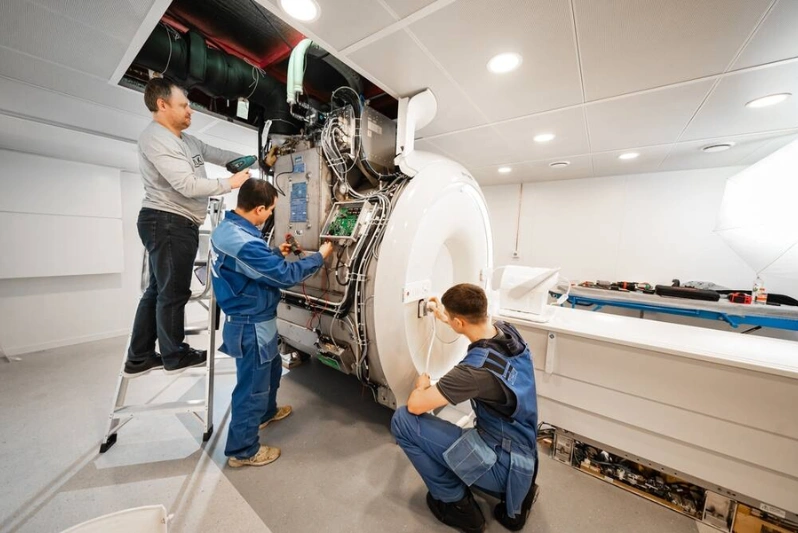
Purchasing medical equipment is only the beginning. Proper installation and commissioning are essential to ensure safe, accurate, and efficient operation.
For advanced systems such as MRI, CT scanners, Cath Labs, and Digital X-ray machines, installation requires careful planning and coordination.
Site Preparation Checklist
Before delivery, ensure the facility has:
- Adequate room dimensions
- Stable electrical power supply
- UPS and backup generator
- HVAC (Heating, Ventilation, and Air Conditioning)
- Radiation shielding (for imaging equipment)
- Proper flooring and structural support
- Internet and network connectivity
- PACS/RIS/HIS integration readiness
- Safety signage and emergency protocols
Proper site preparation helps prevent installation delays and unexpected costs.
Equipment Commissioning
Commissioning is the process of testing and verifying that the equipment functions according to manufacturer specifications before it is handed over for clinical use.
Commissioning Includes:
- Electrical safety testing
- Mechanical inspection
- Software configuration
- Calibration
- Performance testing
- Image quality verification (for imaging systems)
- Network integration
- User acceptance testing (UAT)
Hospitals should not begin clinical operations until commissioning is completed and documented.
Staff Training: A Critical Investment
Even the most advanced medical equipment cannot deliver optimal results without trained operators.
Suppliers should provide comprehensive training for:
- Radiologists
- Radiographers
- Biomedical Engineers
- Nurses
- Technicians
- IT Personnel
- Maintenance Teams
Training Should Cover
- Equipment operation
- Patient positioning
- Safety procedures
- Routine maintenance
- Emergency shutdown
- Software navigation
- Basic troubleshooting
- Cleaning protocols
Continuous training improves efficiency, reduces operator errors, and extends equipment life.
Preventive Maintenance
Preventive maintenance (PM) is essential for maximizing equipment performance and minimizing unexpected downtime.
A well-planned PM program includes:
- Scheduled inspections
- Cleaning and lubrication
- Calibration
- Software updates
- Component replacement
- Performance verification
- Safety testing
Benefits of Preventive Maintenance
- Reduced breakdowns
- Increased equipment lifespan
- Improved diagnostic accuracy
- Lower repair costs
- Enhanced patient safety
- Compliance with accreditation standards
Hospitals should maintain a documented preventive maintenance schedule for every major device.
Annual Maintenance Contracts (AMC)
An Annual Maintenance Contract (AMC) provides ongoing technical support and preventive servicing after the warranty period ends.
A Good AMC Should Include:
- Regular preventive maintenance visits
- Emergency breakdown support
- Priority response times
- Spare parts (as agreed)
- Software updates
- Calibration services
- Technical support hotline
- Performance reports
When evaluating AMC proposals, compare not only the cost but also the scope of services and response commitments.
Warranty Considerations
A warranty protects your investment against manufacturing defects and certain failures.
Before Purchasing, Verify:
- Warranty duration
- Coverage (parts, labor, travel)
- Response time
- Replacement policy
- Exclusions
- Availability of extended warranty options
For high-value imaging systems, extended warranty programs may provide additional peace of mind.
Total Cost of Ownership (TCO)
Many buyers focus solely on the purchase price, but the Total Cost of Ownership (TCO) provides a more accurate measure of long-term investment.
TCO Includes:
- Purchase cost
- Shipping and logistics
- Installation
- Infrastructure upgrades
- Training
- Energy consumption
- Maintenance
- Spare parts
- Software licensing
- Calibration
- Consumables
- Equipment disposal at end of life
Example TCO Breakdown
| Cost Component | Approximate Share |
|---|---|
| Equipment Purchase | 60% |
| Installation & Infrastructure | 10% |
| Training | 5% |
| Maintenance & AMC | 15% |
| Consumables & Spare Parts | 7% |
| Other Operational Costs | 3% |
Evaluating TCO helps procurement teams make financially sustainable decisions.
Lifecycle Management
Medical equipment should be managed throughout its operational life.
Lifecycle Stages
- Planning
- Procurement
- Installation
- Commissioning
- Clinical Use
- Preventive Maintenance
- Upgrades
- Replacement
Effective lifecycle management ensures equipment remains reliable, compliant, and cost-effective.
Common Medical Equipment Procurement Mistakes
Avoiding common mistakes can save hospitals significant time and money.
1. Buying Based Only on Price
The cheapest option may lead to higher maintenance costs, limited support, or reduced clinical performance.
2. Ignoring Future Expansion
Choose equipment that can accommodate increasing patient volumes and future software or hardware upgrades.
3. Overlooking Infrastructure Requirements
Failure to assess room size, power supply, shielding, and cooling can delay installation and increase project costs.
4. Not Verifying Certifications
Always confirm the equipment meets applicable international standards and local regulatory requirements.
5. Inadequate Staff Training
Without proper training, equipment may be underutilized, misused, or damaged.
6. Choosing Suppliers Without Local Support
Local service engineers and readily available spare parts are essential for minimizing downtime.
7. Skipping Preventive Maintenance
Delaying maintenance often results in expensive repairs and reduced equipment lifespan.
Procurement Best Practices
Hospitals and diagnostic centers can improve procurement outcomes by following these best practices:
- Conduct a thorough needs assessment.
- Involve clinicians, biomedical engineers, and finance teams.
- Compare multiple suppliers and proposals.
- Evaluate lifecycle costs, not just purchase price.
- Ensure compliance with relevant standards.
- Negotiate comprehensive warranty and AMC terms.
- Maintain complete procurement documentation.
- Monitor equipment performance after installation.
- Plan for technology upgrades and replacement.
Measuring Procurement Success
Key Performance Indicators (KPIs) can help assess the effectiveness of procurement activities.
| KPI | Why It Matters |
|---|---|
| Equipment Uptime | Indicates reliability |
| Maintenance Costs | Tracks operating expenses |
| Delivery Time | Measures supplier efficiency |
| Installation Time | Reflects project planning |
| User Satisfaction | Gauges ease of use and support |
| Return on Investment (ROI) | Evaluates financial performance |
| Equipment Utilization | Ensures assets are fully leveraged |
Regularly reviewing these KPIs enables continuous improvement in procurement processes.
Key Takeaways
Successful medical equipment procurement extends far beyond purchasing. Proper installation, comprehensive training, preventive maintenance, and lifecycle management are essential to achieving long-term value. By focusing on TCO, partnering with reliable suppliers, and avoiding common pitfalls, hospitals and diagnostic centers can improve operational efficiency and deliver high-quality patient care.
Medical Equipment Procurement Checklist for Hospitals and Diagnostic Centers
Before approving any medical equipment purchase, use this comprehensive checklist to ensure a smooth procurement process.
Planning Stage
☐ Identify clinical requirements
☐ Define project budget
☐ Estimate patient volume
☐ Prepare equipment specifications
☐ Assess room dimensions
☐ Verify electrical requirements
☐ Obtain stakeholder approvals
Supplier Evaluation
☐ Compare multiple suppliers
☐ Verify company experience
☐ Check customer references
☐ Evaluate after-sales service
☐ Review spare parts availability
☐ Compare warranty terms
☐ Review AMC offerings
☐ Confirm installation support
Technical Evaluation
☐ Verify product specifications
☐ Confirm software compatibility
☐ Check upgrade options
☐ Assess energy efficiency
☐ Evaluate user interface
☐ Review safety features
☐ Compare image quality (for diagnostic equipment)
Documentation Checklist
☐ Product Brochure
☐ Technical Datasheet
☐ Quotation
☐ Purchase Order
☐ Invoice
☐ Warranty Certificate
☐ Installation Report
☐ Acceptance Test Report
☐ Calibration Certificate
☐ Training Completion Report
☐ AMC Agreement
Latest Medical Equipment Procurement Trends in UAE
The UAE healthcare industry continues to invest heavily in advanced medical technologies to improve patient outcomes and operational efficiency. Procurement strategies are increasingly focused on innovation, sustainability, and digital transformation.
1. AI-Enabled Medical Equipment
Artificial intelligence is now integrated into:
- MRI systems
- CT scanners
- Digital X-ray
- Mammography
- Ultrasound
- PACS software
Benefits include:
- Faster diagnosis
- Improved image quality
- Automated workflow
- Reduced reporting time
2. Growing Demand for Refurbished Equipment
Many hospitals and diagnostic centers are choosing premium refurbished systems because they offer:
- Lower capital investment
- Reliable performance
- Faster installation
- Excellent return on investment
This trend is particularly attractive for expanding diagnostic centers and specialty clinics.
3. Smart Hospital Integration
Healthcare facilities are increasingly integrating equipment with:
- Hospital Information Systems (HIS)
- Radiology Information Systems (RIS)
- Picture Archiving and Communication Systems (PACS)
- Electronic Medical Records (EMR)
This enhances data accessibility, workflow efficiency, and patient care coordination.
4. Sustainability in Procurement
Hospitals are prioritizing:
- Energy-efficient equipment
- Lower power consumption
- Environmentally friendly technologies
- Longer equipment lifecycles
- Reduced maintenance waste
Sustainable procurement contributes to cost savings and supports environmental goals.
Why Choose SASHA MEDICAL AND SURGICAL EQUIPMENT TRADING L.L.C.?
Choosing the right procurement partner is just as important as selecting the right equipment.
SASHA MEDICAL AND SURGICAL EQUIPMENT TRADING L.L.C. offers end-to-end medical equipment solutions for hospitals, clinics, and diagnostic centers across the UAE.
Our Services
- Medical Equipment Consultation
- Procurement Planning
- Diagnostic Center Setup
- Hospital Equipment Supply
- Refurbished Imaging Systems
- MRI Machines
- CT Scan Machines
- Ultrasound Systems
- Cath Lab Equipment
- Digital X-ray Systems
- Installation & Commissioning
- Preventive Maintenance
- Annual Maintenance Contracts (AMC)
- Biomedical Engineering Support
Why Healthcare Providers Choose Us
- Extensive industry experience
- High-quality medical equipment
- Competitive pricing
- Trusted global brands
- Technical consultation
- Professional installation
- Reliable after-sales support
- Prompt maintenance services
- Customized procurement solutions
Whether you’re launching a new facility or upgrading existing equipment, our team is committed to delivering reliable solutions that align with your clinical and operational goals.
Conclusion
Medical equipment procurement is a strategic investment that directly influences the quality of healthcare services, operational efficiency, and long-term financial sustainability. By carefully planning procurement activities, selecting reliable suppliers, evaluating lifecycle costs, and ensuring compliance with industry standards, hospitals and diagnostic centers can make informed decisions that support both patient care and business growth.
Whether you’re equipping a new healthcare facility or modernizing an existing one, adopting a structured procurement approach helps minimize risks, optimize investments, and prepare your organization for future healthcare demands.
What is medical equipment procurement?
Medical equipment procurement is the structured process of identifying, evaluating, purchasing, installing, and maintaining medical devices required by hospitals and diagnostic centers.
Is refurbished medical equipment a good investment?
Yes. High-quality refurbished equipment sourced from reputable suppliers can offer excellent performance, lower acquisition costs, and faster return on investment, especially for diagnostic centers and growing healthcare facilities.
Why is preventive maintenance important?
Preventive maintenance helps:
Extend equipment lifespan
Reduce unexpected downtime
Improve diagnostic accuracy
Enhance patient safety
Lower repair costs
Maintain operational efficiency
How do hospitals select the right medical equipment supplier?
Hospitals should assess:
Industry experience
Product quality
Technical expertise
Installation capabilities
Warranty terms
Service response time
Availability of spare parts
Customer references
What is the Total Cost of Ownership (TCO)?
TCO includes all costs associated with the equipment throughout its lifecycle, including purchase, installation, maintenance, training, consumables, software updates, and eventual replacement.
Comments are closed