
Subtotal ₹0.00

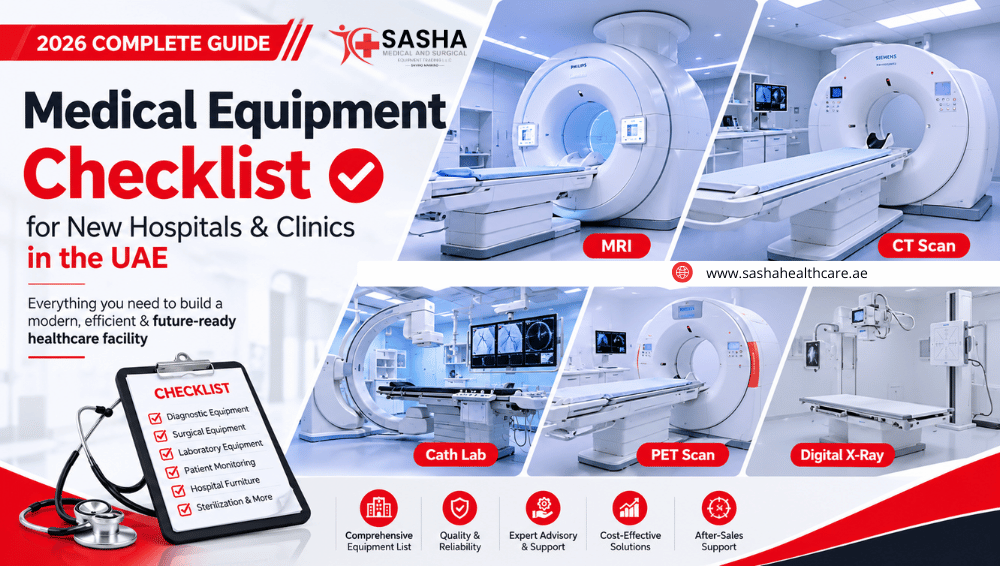
Starting a new hospital or clinic is a major investment that requires careful planning, regulatory compliance, and selecting the right medical technology. One of the most important steps is preparing a comprehensive Medical Equipment Checklist UAE to ensure your facility is ready to deliver safe, efficient, and high-quality patient care from day one.
Whether you are opening a multispecialty hospital, a diagnostic center, a specialty clinic, or a day surgery center in Dubai, Abu Dhabi, Sharjah, or anywhere across the UAE, choosing the right equipment directly affects clinical outcomes, operational efficiency, and long-term profitability.
Healthcare providers today must also consider evolving patient expectations, digital transformation, and compliance with UAE healthcare regulations. Investing in high-quality medical equipment from a trusted Medical Equipment Supplier UAE helps reduce downtime, improve workflow, and enhance patient satisfaction.
In this complete guide, we’ll cover the essential equipment every healthcare facility should consider, estimated budget ranges, procurement tips, and how partnering with an experienced Medical Equipment Distributor UAE can simplify your project.
Table of Contents
- Why Planning Medical Equipment Matters
- Complete Medical Equipment Checklist
- Categories of Essential Hospital Equipment
- Emergency Department Equipment
- ICU Equipment Checklist
- Operation Theatre Equipment
- Laboratory Equipment
- Radiology & Imaging Equipment
- Patient Monitoring Equipment
- Medical Furniture
- Sterilization Equipment
- Pharmacy Equipment
- Hospital IT & Digital Systems
- Equipment Cost Comparison
- Common Buying Mistakes
- Expert Buying Tips
- Choosing the Right Medical Equipment Supplier
- FAQs
- Conclusion
Why Planning Medical Equipment Matters
Purchasing medical equipment is more than simply buying devices—it’s about building an efficient healthcare ecosystem.
A well-planned Hospital Equipment Checklist UAE helps healthcare providers:
- Improve patient safety
- Increase diagnostic accuracy
- Enhance workflow efficiency
- Reduce maintenance costs
- Ensure regulatory compliance
- Support future expansion
- Improve return on investment
- Reduce equipment downtime
Without proper planning, hospitals often purchase unnecessary equipment while overlooking essential systems needed for smooth day-to-day operations.
Benefits of a Structured Equipment Plan
| Benefit | Impact |
|---|---|
| Better Budget Management | Prevents overspending |
| Improved Patient Care | Faster diagnosis and treatment |
| Operational Efficiency | Reduced workflow delays |
| Regulatory Compliance | Easier licensing approvals |
| Future Scalability | Supports expansion |
Understanding Different Types of Healthcare Facilities
Before purchasing equipment, identify the type of healthcare facility you’re building.
| Facility Type | Equipment Requirement |
|---|---|
| General Hospital | Complete diagnostic, ICU, OT, laboratory, pharmacy, and imaging systems |
| Specialty Clinic | Specialty-specific equipment with basic diagnostics |
| Diagnostic Center | MRI, CT, Ultrasound, X-ray, laboratory equipment |
| Day Surgery Center | OT equipment, anesthesia systems, recovery beds |
| Medical Center | Consultation, diagnostics, emergency support |
Each facility requires a different Clinic Medical Equipment List, making proper planning essential.
Complete Medical Equipment Checklist UAE
Below is a comprehensive checklist categorized by department.
| Department | Major Equipment |
|---|---|
| Reception | Registration systems, queue management, computers |
| Consultation Rooms | Examination beds, BP apparatus, ECG machine |
| Emergency | Defibrillator, crash cart, ventilator |
| ICU | Multiparameter monitors, infusion pumps |
| Operating Theatre | Surgical lights, anesthesia workstation |
| Radiology | MRI, CT, Ultrasound, Digital X-ray |
| Laboratory | Hematology analyzer, biochemistry analyzer |
| Pharmacy | Refrigerators, dispensing cabinets |
| CSSD | Autoclaves, sterilizers |
| Patient Rooms | Hospital beds, bedside lockers |
| Administration | Hospital Information System (HIS), EMR software |
Essential Categories of Medical Equipment
A successful healthcare facility typically invests in the following major categories:
1. Diagnostic Equipment
Diagnostic devices enable accurate disease detection and treatment planning.
Examples include:
- MRI Systems
- CT Scan Machines
- Digital X-ray Systems
- Ultrasound Machines
- ECG Machines
- Endoscopy Systems
These systems form the backbone of most diagnostic centers across the UAE.
2. Patient Monitoring Equipment
Monitoring devices continuously assess patient health.
Common examples include:
- Multiparameter monitors
- Pulse oximeters
- ECG monitors
- Blood pressure monitors
- Capnography systems
- Central monitoring stations
3. Life Support Equipment
Life-saving devices are critical for emergency and intensive care.
Examples:
- Ventilators
- Defibrillators
- Infusion pumps
- Syringe pumps
- Oxygen concentrators
- Suction machines
4. Surgical Equipment
Operating theatres require highly specialized equipment.
Typical items include:
- Surgical tables
- Operating lights
- Electrosurgical units
- Anesthesia workstations
- Surgical microscopes
- Endoscopic towers
5. Laboratory Equipment
Clinical laboratories depend on reliable diagnostic systems.
Examples:
- Hematology analyzers
- Biochemistry analyzers
- Immunoassay analyzers
- Centrifuges
- Microscopes
- Refrigerators
- Incubators
6. Sterilization Equipment
Proper sterilization prevents healthcare-associated infections.
Essential equipment includes:
- Steam autoclaves
- Low-temperature sterilizers
- Washer disinfectors
- Ultrasonic cleaners
- Drying cabinets
Key Factors Before Purchasing Medical Equipment
Healthcare investors should evaluate several important factors before finalizing purchases.
Clinical Requirements
Choose equipment based on the medical specialties you plan to offer.
Patient Volume
Higher patient volumes require durable, high-throughput equipment.
Available Space
Ensure sufficient room for installation, workflow, and maintenance access.
Service Support
Reliable local maintenance and spare parts availability are essential.
Warranty Coverage
Comprehensive warranties help reduce long-term operational costs.
Technology Compatibility
Select equipment that integrates seamlessly with your Hospital Information System (HIS) and Electronic Medical Records (EMR).
Comparison Table: New vs Refurbished Medical Equipment
| Feature | New Equipment | Refurbished Equipment |
|---|---|---|
| Initial Cost | Higher | Lower |
| Warranty | Full manufacturer warranty | Limited warranty |
| Technology | Latest features | Previous-generation models |
| ROI | Long-term | Faster short-term |
| Availability | May require lead time | Often readily available |
| Best For | Large hospitals | Startups, clinics, diagnostic centers |
10 Expert Tips Before Buying Medical Equipment
- Define your clinical services before purchasing.
- Plan equipment according to projected patient volume.
- Verify UAE regulatory compliance.
- Choose equipment with local technical support.
- Evaluate the total cost of ownership—not just the purchase price.
- Ensure compatibility with digital hospital systems.
- Consider energy efficiency and operating costs.
- Prioritize preventive maintenance plans.
- Purchase from experienced suppliers with installation expertise.
- Plan for future expansion and technology upgrades.
In this section, we’ll explore the essential equipment required for each major department of a modern healthcare facility.
Emergency Department Equipment Checklist
The Emergency Department (ED) is the first point of care for patients with life-threatening conditions. It must be equipped with reliable and fast-response medical devices to support emergency diagnosis, stabilization, and treatment.
Essential Emergency Equipment
| Equipment | Purpose | Recommended Quantity |
|---|---|---|
| Defibrillator | Cardiac resuscitation | 1–2 |
| Multiparameter Patient Monitor | Monitor vital signs | 2–6 |
| Ventilator | Respiratory support | 2–4 |
| ECG Machine | Cardiac assessment | 1–2 |
| Infusion Pump | Controlled medication delivery | 4–10 |
| Syringe Pump | Precise drug infusion | 4–8 |
| Portable Suction Unit | Airway management | 2–4 |
| Crash Cart | Emergency medication and supplies | 1–2 |
| Oxygen Concentrator/Cylinder | Oxygen therapy | As required |
| Portable Ultrasound | Rapid bedside diagnosis | 1 |
Recommended Features
- Portable and compact design
- Battery backup
- Digital touchscreen interface
- Electronic Medical Record (EMR) integration
- Fast boot-up time
- Easy maintenance
Estimated Price Range (AED)
| Equipment | Approximate Price |
|---|---|
| Defibrillator | AED 12,000–40,000 |
| Ventilator | AED 35,000–180,000 |
| ECG Machine | AED 5,000–20,000 |
| Patient Monitor | AED 4,000–30,000 |
| Infusion Pump | AED 2,500–8,000 |
Note: Prices vary depending on the manufacturer, model, features, warranty, and whether the equipment is new or refurbished.
ICU Equipment Checklist
An Intensive Care Unit (ICU) requires advanced technology to continuously monitor and support critically ill patients. Selecting dependable equipment from an experienced Medical Equipment Supplier UAE helps ensure patient safety and uninterrupted clinical operations.
Essential ICU Equipment
| Equipment | Function |
|---|---|
| ICU Bed | Advanced patient positioning |
| Ventilator | Respiratory support |
| Multiparameter Monitor | Continuous monitoring |
| Infusion Pump | Medication administration |
| Syringe Pump | Precise infusion therapy |
| Defibrillator | Cardiac emergencies |
| Suction Machine | Airway clearance |
| Blood Gas Analyzer | Critical blood analysis |
| Dialysis Machine (if applicable) | Renal support |
| Central Monitoring Station | Monitor multiple patients |
ICU Procurement Checklist
✔ ICU-grade beds
✔ Ventilator with multiple ventilation modes
✔ Bedside monitors
✔ Infusion and syringe pumps
✔ Emergency power backup
✔ Oxygen pipeline system
✔ Nurse call system
✔ Medical gas outlets
Comparison Table: Standard Ward vs ICU Equipment
| Feature | Standard Ward | ICU |
|---|---|---|
| Patient Monitoring | Basic | Continuous |
| Ventilator | Usually not required | Essential |
| Infusion Pumps | Limited | Multiple |
| Monitoring Station | No | Yes |
| Emergency Equipment | Shared | Dedicated |
| Staff-to-Patient Ratio | Lower | Higher |
Operation Theatre (OT) Equipment Checklist
The operating theatre is one of the most critical areas of any hospital. Every piece of equipment should support surgical precision, infection prevention, and patient safety.
Essential Operation Theatre Equipment
| Equipment | Purpose |
|---|---|
| Operating Table | Surgical positioning |
| LED Surgical Lights | High-quality illumination |
| Anesthesia Workstation | Safe anesthesia delivery |
| Electrosurgical Unit | Tissue cutting and coagulation |
| Surgical Instrument Sets | Surgical procedures |
| Patient Monitor | Vital monitoring |
| Suction Apparatus | Fluid removal |
| Medical Gas Pipeline | Oxygen and anesthetic gases |
| OT Pendant | Equipment organization |
| Surgical Microscope | Microsurgery |
Optional Equipment
Depending on the specialty, hospitals may also require:
- Laparoscopy Tower
- Arthroscopy System
- C-Arm Imaging System
- Endoscopy Equipment
- Orthopedic Power Tools
- Surgical Navigation Systems
Buying Considerations
When selecting OT equipment:
- Choose ergonomic designs.
- Ensure compatibility between devices.
- Verify preventive maintenance support.
- Consider future technology upgrades.
- Prioritize internationally recognized quality standards.
Laboratory Equipment Checklist
Clinical laboratories are essential for accurate diagnosis and disease management. The right Clinic Medical Equipment List should include equipment that supports high testing volumes while maintaining accuracy and efficiency.
Core Laboratory Equipment
| Equipment | Function |
|---|---|
| Hematology Analyzer | Blood testing |
| Biochemistry Analyzer | Clinical chemistry |
| Electrolyte Analyzer | Electrolyte measurement |
| Immunoassay Analyzer | Hormone and infection testing |
| Centrifuge | Sample preparation |
| Microscope | Cell examination |
| Refrigerators | Sample storage |
| Incubators | Culture growth |
| Autoclave | Sterilization |
| Laboratory Information System (LIS) | Workflow management |
Laboratory Setup Tips
- Allocate separate zones for sample collection and testing.
- Install backup power systems.
- Implement barcode-based sample tracking.
- Maintain temperature-controlled storage.
- Plan routine calibration schedules.
Estimated Laboratory Equipment Cost (AED)
| Equipment | Approximate Price |
|---|---|
| Hematology Analyzer | AED 20,000–120,000 |
| Biochemistry Analyzer | AED 30,000–250,000 |
| Immunoassay Analyzer | AED 70,000–400,000 |
| Centrifuge | AED 3,000–15,000 |
| Laboratory Refrigerator | AED 5,000–25,000 |
Radiology & Imaging Equipment
Diagnostic imaging is a significant investment for hospitals and diagnostic centers. A trusted Medical Equipment Distributor UAE can help healthcare providers select systems that align with patient demand, available space, and long-term service requirements.
Essential Imaging Equipment
| Equipment | Common Applications |
|---|---|
| MRI System | Neurology, orthopedics, oncology |
| CT Scanner | Trauma, emergency medicine |
| Digital X-ray | General imaging |
| Ultrasound Machine | Obstetrics, cardiology, abdominal imaging |
| Mammography System | Breast imaging |
| C-Arm | Surgical imaging |
| PACS Server | Image storage and retrieval |
| RIS Software | Radiology workflow |
Choosing Imaging Equipment
Before investing, consider:
- Daily patient volume
- Available installation space
- Radiation safety requirements
- Electrical infrastructure
- Annual maintenance costs
- Software upgrades
- Availability of local technical support
Comparison Table: MRI vs CT vs Digital X-ray
| Feature | MRI | CT Scan | Digital X-ray |
|---|---|---|---|
| Radiation | No | Yes | Yes |
| Scan Speed | Moderate | Fast | Very Fast |
| Soft Tissue Imaging | Excellent | Good | Limited |
| Bone Imaging | Good | Excellent | Excellent |
| Initial Investment | Very High | High | Moderate |
| Typical Applications | Brain, spine, joints | Trauma, chest, abdomen | Orthopedic, chest imaging |
Patient Monitoring Equipment
Patient monitoring systems are used across emergency departments, ICUs, operating theatres, recovery rooms, and inpatient wards. Reliable monitoring enables healthcare professionals to respond quickly to changes in patient condition.
Essential Monitoring Devices
| Equipment | Purpose |
|---|---|
| Multiparameter Monitor | Heart rate, ECG, SpO₂, BP |
| Pulse Oximeter | Oxygen saturation |
| ECG Machine | Cardiac assessment |
| Capnography Monitor | CO₂ monitoring |
| Fetal Monitor | Maternal and fetal monitoring |
| Central Monitoring Station | Monitor multiple patients |
| Portable Vital Signs Monitor | Mobile patient assessments |
Benefits of Modern Monitoring Systems
- Real-time patient monitoring
- Early detection of deterioration
- Reduced response times
- Improved patient safety
- Digital data recording
- Integration with hospital information systems
Expert Procurement Advice
When purchasing patient monitoring equipment:
- Choose scalable systems for future expansion.
- Ensure interoperability with existing hospital software.
- Prioritize intuitive interfaces for clinical staff.
- Confirm local service availability and spare parts.
- Evaluate warranty terms and preventive maintenance options.
Medical Furniture Checklist
Medical furniture plays a vital role in patient comfort, staff efficiency, and infection control. Investing in durable, ergonomic, and easy-to-clean furniture improves the overall healthcare experience.
Essential Medical Furniture
| Furniture | Purpose |
|---|---|
| Hospital Beds | Inpatient care |
| ICU Beds | Critical care patients |
| Examination Couches | Patient examinations |
| Overbed Tables | Patient convenience |
| Bedside Lockers | Personal storage |
| Wheelchairs | Patient transportation |
| Stretchers & Trolleys | Emergency transport |
| IV Stands | IV therapy |
| Waiting Area Chairs | Patient seating |
| Doctor’s Office Furniture | Consultation rooms |
Buying Considerations
- Anti-bacterial and easy-to-clean surfaces
- Adjustable and ergonomic designs
- High weight capacity
- Durable construction
- Compliance with healthcare safety standards
Sterilization Equipment Checklist
Proper sterilization is essential to reduce healthcare-associated infections and maintain patient safety.
Essential Sterilization Equipment
| Equipment | Function |
|---|---|
| Steam Autoclave | Sterilizes surgical instruments |
| Plasma Sterilizer | Heat-sensitive instruments |
| Washer Disinfector | Automated cleaning |
| Ultrasonic Cleaner | Instrument pre-cleaning |
| Instrument Drying Cabinet | Moisture removal |
| Sterile Storage Cabinets | Maintain instrument sterility |
Sterilization Best Practices
- Separate clean and contaminated workflows.
- Validate sterilization cycles regularly.
- Maintain sterilization logs.
- Train staff on infection prevention protocols.
- Schedule preventive maintenance for sterilization equipment.
Pharmacy Equipment Checklist
A modern hospital pharmacy requires organized storage, temperature control, and efficient dispensing systems.
| Equipment | Purpose |
|---|---|
| Medicine Refrigerators | Cold-chain storage |
| Pharmacy Shelving | Organized inventory |
| Automated Dispensing Cabinets | Medication management |
| Barcode Scanner | Inventory tracking |
| Label Printer | Prescription labeling |
| Computer & Pharmacy Software | Digital inventory management |
Hospital IT & Digital Systems
Digital transformation has become an essential part of modern healthcare facilities. Integrating medical devices with software systems improves efficiency, reduces errors, and enhances patient care.
Recommended Digital Systems
| System | Benefit |
|---|---|
| Hospital Information System (HIS) | Centralized hospital operations |
| Electronic Medical Records (EMR/EHR) | Digital patient records |
| Picture Archiving and Communication System (PACS) | Medical image storage |
| Radiology Information System (RIS) | Imaging workflow management |
| Laboratory Information System (LIS) | Laboratory automation |
| Queue Management System | Improved patient flow |
| Nurse Call System | Faster patient response |
| Inventory Management Software | Equipment and supply tracking |
Approximate Medical Equipment Cost Table (AED)
Disclaimer: The following estimates are approximate and may vary depending on the manufacturer, specifications, country of origin, warranty, installation requirements, and whether the equipment is new or refurbished.
| Category | Estimated Cost (AED) |
|---|---|
| MRI System | 1,000,000–5,000,000+ |
| CT Scanner | 500,000–2,500,000 |
| Digital X-ray | 150,000–600,000 |
| Ultrasound Machine | 40,000–350,000 |
| ICU Bed | 12,000–45,000 |
| Ventilator | 35,000–180,000 |
| Patient Monitor | 4,000–30,000 |
| Anesthesia Workstation | 90,000–350,000 |
| Surgical Light | 20,000–120,000 |
| Hematology Analyzer | 20,000–120,000 |
| Biochemistry Analyzer | 30,000–250,000 |
| Steam Autoclave | 20,000–120,000 |
Comparison Table: Buying vs Refurbished Medical Equipment
| Factor | New Equipment | Refurbished Equipment |
|---|---|---|
| Initial Investment | Higher | Lower |
| Technology | Latest generation | Proven previous-generation models |
| Warranty | Full manufacturer warranty | Supplier warranty |
| Delivery Time | May require factory lead time | Often available sooner |
| Suitable For | Large hospitals | Startups, clinics, diagnostic centers |
| Return on Investment | Long-term | Faster initial ROI |
Common Mistakes to Avoid
Avoiding these mistakes can save significant time and money during your hospital setup project.
- Purchasing equipment before finalizing the facility layout.
- Selecting equipment based only on the lowest price.
- Ignoring future expansion requirements.
- Failing to verify compatibility with digital systems.
- Overlooking installation and training costs.
- Choosing suppliers without local technical support.
- Ignoring preventive maintenance planning.
- Underestimating power and HVAC requirements.
- Purchasing unnecessary equipment that does not match clinical services.
- Not budgeting for consumables and accessories.
10 Expert Buying Tips
- Develop a department-wise procurement plan.
- Prioritize clinical needs before advanced features.
- Compare multiple quotations from reputable suppliers.
- Consider the total cost of ownership, including maintenance and consumables.
- Verify warranty coverage and service response times.
- Ensure staff training is included with installation.
- Confirm spare parts availability in the UAE.
- Purchase scalable systems that support future growth.
- Plan annual preventive maintenance schedules.
- Partner with an experienced Medical Equipment Supplier UAE for consultation, installation, and long-term support.
Why Choose a Reliable Medical Equipment Supplier in the UAE?
Choosing the right supplier is just as important as selecting the equipment itself. A reliable supplier helps healthcare facilities reduce operational risks, maintain equipment performance, and receive timely technical assistance.
When evaluating Medical Equipment Suppliers in Dubai, consider the following:
- Wide product portfolio
- Experience serving hospitals and clinics
- Installation and commissioning expertise
- Preventive maintenance programs
- Availability of spare parts
- Technical support within the UAE
- Product training for healthcare professionals
- Transparent warranties and service agreements
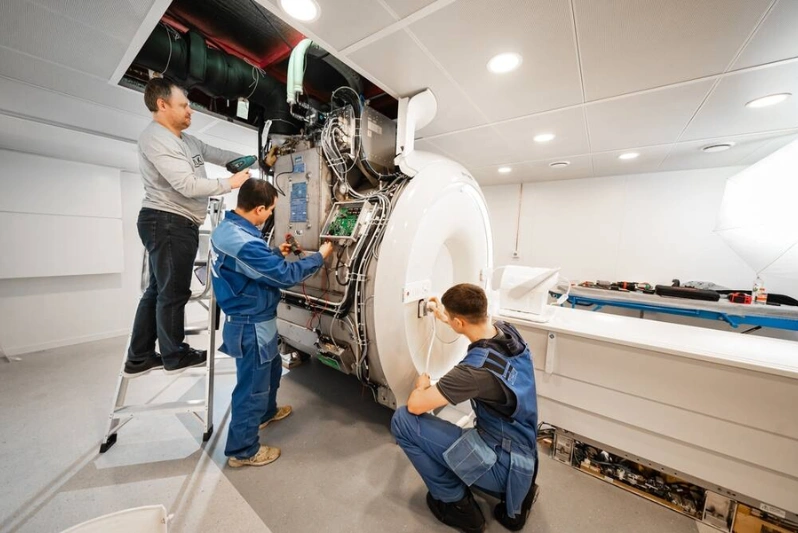
SASHA MEDICAL AND SURGICAL EQUIPMENT TRADING L.L.C supports hospitals, clinics, and diagnostic centers across the UAE with quality medical equipment solutions. In addition to supplying medical devices, the company provides consultation, equipment installation, preventive maintenance, and responsive after-sales support to help healthcare facilities maintain efficient and reliable operations.
Conclusion
Establishing a successful healthcare facility begins with careful planning and selecting the right equipment. A comprehensive Medical Equipment Checklist UAE helps hospitals and clinics prioritize essential purchases, manage budgets effectively, improve operational efficiency, and deliver high-quality patient care.
From emergency departments and intensive care units to laboratories, radiology suites, pharmacies, and digital hospital systems, every department requires thoughtful procurement planning and reliable technology. Working with an experienced Hospital Equipment Supplier Dubai ensures that equipment is correctly selected, installed, maintained, and supported throughout its lifecycle.
Whether you are opening a new clinic, expanding a diagnostic center, or developing a multispecialty hospital, investing in quality medical equipment today lays the foundation for long-term clinical excellence and sustainable growth.
Request a Customized Medical Equipment Checklist
Planning a new hospital or clinic in the UAE?
SASHA MEDICAL AND SURGICAL EQUIPMENT TRADING L.L.C can help you with:
- Medical equipment consultation
- Department-wise equipment planning
- Supply of diagnostic and hospital equipment
- Professional installation and commissioning
- Preventive maintenance services
- Reliable after-sales technical support
Contact our team today to receive a customized medical equipment checklist and a tailored quotation for your healthcare project.
What is the most important medical equipment required for a new hospital in the UAE?
A new hospital should prioritize emergency equipment, ICU systems, patient monitors, diagnostic imaging devices, laboratory analyzers, operating theatre equipment, sterilization systems, and digital hospital management software. The exact requirements depend on the hospital’s specialties and patient capacity.
How much does it cost to equip a hospital in the UAE?
The investment varies based on the size of the facility, specialties offered, and equipment specifications. Small clinics may require a modest investment, while multispecialty hospitals with advanced imaging and surgical departments can require significantly higher budgets.
Why is preventive maintenance important for medical equipment?
Preventive maintenance helps minimize unexpected downtime, extends equipment lifespan, improves patient safety, and ensures consistent clinical performance while supporting regulatory compliance.
How do I choose the best Medical Equipment Supplier UAE?
Select a supplier with industry experience, a comprehensive product range, local service engineers, preventive maintenance capabilities, transparent warranties, staff training, and strong after-sales support.
Comments are closed