Subtotal ₹0.00

Introduction
Dubai is rapidly emerging as a medical hub, with hospitals, clinics, labs, and wellness centres growing at a phenomenal pace. When you’re sourcing medical equipment and supplies, you want reliability, compliance, and performance. Choosing medical items suppliers in Dubai who understand quality, regulation, and speed can make or break your operations.
In this deep-dive guide, we’ll walk you through exactly how to select top-tier suppliers, what to demand, what to avoid, and how to ensure your medical equipment supply chain is bulletproof. Prepare to elevate your purchasing power, prevent costly mistakes, and secure lasting partnerships.
What Defines a Leading Medical Items Supplier in Dubai
A best-in-class medical items supplier in Dubai is not just a vendor. They are a comprehensive partner who offers:
- An extensive catalogue spanning from disposables (gloves, masks) to complex machines (X-ray, ultrasound).
- Verified quality: ISO certifications, CE marking, or relevant Gulf/Emirates regulatory approvals.
- Rapid delivery networks, able to manage cold chain or sensitive equipment forwarding.
- Transparent pricing and flexible payment terms.
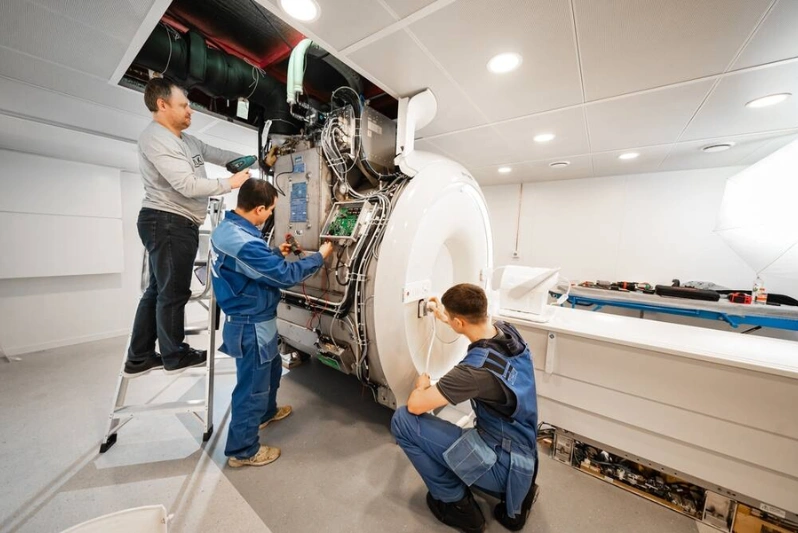
- Proactive support: installation, calibration, training, maintenance.
These suppliers don’t just sell products—they prevent failures, guarantee uptime, and help facilities meet global standards.
Key Features to Look For in Medical Equipment Supply Companies
When evaluating a supplier for medical equipment supply, check for these MUST-HAVES:
- Compliance & Certification: ISO 13485, CE marking, FDA approvals, GCC/Emirates MOH registration.
- Product Diversity: Medical consumables, diagnostic tools, surgical instruments, hospital furniture, imaging equipment, etc.
- Customisation & Originality: OEM vs third-party, ability to source brand names or equivalents.
- After-Sales Service: Warranty, spare parts availability, technical support.
- Fast Logistics: Local warehousing, reliable shipping, customs clearance support.
- Quality Assurance: Inspection protocols, batch testing, traceability.
- Competitive Pricing: Volume discounts, transparent quotes, inclusive of taxes.
Regulatory Compliance & Certifications: Non-Negotiables
Dubai has strict regulatory frameworks. A legitimate medical items supplier must adhere to:
- Dubai Health Authority (DHA) or Ministry of Health & Prevention (MOHAP) registration for medical devices.
- Good Distribution Practice (GDP) & Good Manufacturing Practice (GMP) norms.
- ISO 13485 quality management system specific to medical devices.
- CE marking or other international certifications, if importing.
Always request and verify copies of certificates. Fake or expired certificates can result in fines, device recalls, or reputational damage.
Quality Assurance & Product Range
Your supply partner should offer both breadth and depth:
- Consumables & Disposables: gloves, masks, gowns, catheters.
- Diagnostic & Laboratory: microscopes, centrifuges, reagents, testing kits.
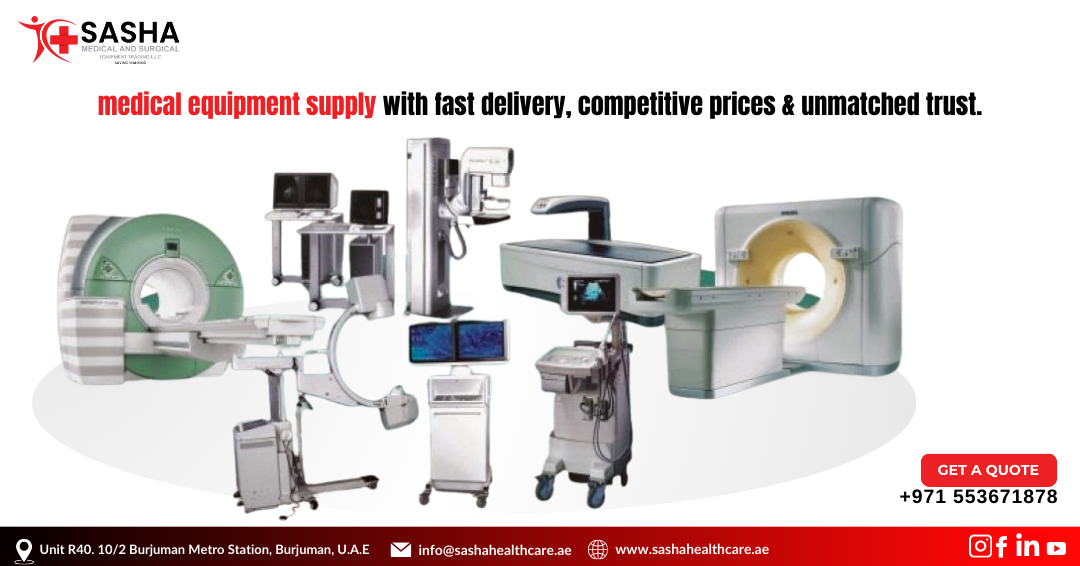
- Imaging & Radiology: X-ray machines, CT scanners, ultrasound devices.
- Surgical & Critical Care: ventilators, defibrillators, operating room lights.
- Facility Equipment: hospital beds, furniture, sterilisation equipment.
Each product line should come with warranty, traceability (batch/lot numbers), and user instructions. A strong supplier offers internal QC and, where needed, third-party testing.
Supply Chain & Logistics in Dubai Context
Dubai’s geography and infrastructure give suppliers an edge—but only if managed well:
- Proximity to major ports like Jebel Ali, easy access to airports.
- Warehousing capacity, especially for cold chain or sensitive electronics.
- Customs & duty expertise—medical devices may attract special import duties or clearances.
- Redundancy in logistics: backups for delays due to weather, regulatory hold ups, etc.
When a supplier proactively handles logistics, you minimize delays & disruptions.
Pricing Strategies & Cost Transparency
Medical equipment supply is expensive. You need clarity:
- Unit price vs total landed cost including shipping, duty, VAT.
- Volume pricing – bulk orders should unlock discounts.
- Payment terms: cash upfront, net-30, net-60, letter of credit.
- Hidden costs: calibration, installation, spare parts, service.
Power moves: negotiate for bundled deals (equipment + consumables), ask for lifecycle cost estimates, insist on clearly written contracts.
Customer Support & After-Sales Services
Superior customer support turns a good supplier into a great one. Features to value:
- On-site setup and user training.
- Scheduled maintenance and prompt repair services.
- Spare parts availability locally.
- Remote or hotline technical assistance.
- Clear warranty coverage: what’s included, what’s excluded.
Look for supplier-provided service contracts or support plans.
Reputation: Reviews, Case Studies & References
Trust indicators are gold in the medical supply world:
- Testimonials from hospitals, clinics, labs.
- Case studies: shows how supplier solved a problem or improved efficiency.
- Certifications and awards.
- Online reviews (Google, industry-specific forums).
- Longevity in the market.
Always ask for at least 2 references who have used the same product you’re buying.
Top Mistakes to Avoid When Selecting Suppliers
Even experienced buyers slip. Avoid:
- Choosing solely based on lowest price → risk of poor quality or fake goods.
- Ignoring after-sales and service availability.
- Overlooking regulatory compliance and expiry of certificates.
- Poor logistics planning leading to delays.
- Failing to inspect batches / accepting subpar shipments.
One disastrous product delivery can cost far more than extra due diligence.
Actionable Steps to Vet and Choose Your Supplier
Here’s a pragmatic checklist to follow when choosing a medical items supplier in Dubai:
- Define Your Needs Precisely
- What medical items do you need?
- What specs (size, functionality, standards)?
- Consumables vs durable goods.
- Shortlist Potential Suppliers
- Use directories, referrals, trade shows.
- Prioritize those with strong regulatory standing.
- Request Quotations & Certifications
- Ask for ISO, CE, DHA/MOHAP paperwork.
- Ask for product samples, technical specifications.
- Evaluate Logistics & Delivery Timelines
- Lead times, shipping, import duties, warehousing.
- Check References & Past Performance
- Contact past clients.
- Visit site or facility if possible.
- Negotiate Terms & Contracts
- Price, warranty, after-sales, penalties for delays or defects.
- Trial Order
- Small order first to test quality, service, delivery.
- Monitor & Review
- Track product performance, customer feedback, maintenance needs.
Future Trends in Medical Items Supply in Dubai
The medical supply industry in Dubai is evolving rapidly. Here are key future trends you should watch:
- Digital Procurement Platforms – Hospitals are moving towards digital supply chains with AI-driven ordering and forecasting.
- IoT & Smart Devices – More devices will be connected to networks for real-time monitoring.
- Sustainability – Demand for eco-friendly packaging and reusable medical items is growing.
- 3D Printing of Equipment – Certain consumables and prosthetics may soon be 3D-printed locally, reducing dependency on imports.
- Robotics in Logistics – Warehouses are adopting automation for faster order fulfillment.
Forward-thinking medical items suppliers in Dubai are already investing in these innovations to stay ahead.
Why Dubai is a Global Hub for Medical Equipment Supply
Dubai’s unique position makes it the perfect place for medical equipment supply:
- Strategic Location: Connects Europe, Asia, and Africa.
- World-Class Infrastructure: Ports, airports, and logistics hubs.
- Free Zones: Such as Dubai Healthcare City (DHCC) encouraging foreign investment.
- Supportive Regulations: Government pushing for medical tourism & healthcare excellence.
- Growing Healthcare Market: Surge in private hospitals, clinics, and wellness centers.
All these factors mean medical suppliers here can cater not only to UAE clients but to the wider Middle East, Africa, and South Asia markets.
Top Questions Buyers Should Ask Before Signing a Contract
Before locking into a supplier agreement, make sure you ask these power questions:
- What certifications back your products?
- Do you provide warranties and service contracts?
- Where are your warehouses located, and what’s the average delivery time?
- Can you handle emergency supply requests?
- Do you offer training for complex equipment?
- How do you ensure authenticity and prevent counterfeiting?
- Can you provide references from hospitals/clinics you’ve worked with?
These questions will reveal the professionalism and credibility of any medical items supplier in Dubai.
Case Study Example: How the Right Supplier Saved a Hospital Millions
Scenario:
A mid-sized private hospital in Dubai faced repeated breakdowns with their diagnostic imaging machines sourced from a low-cost supplier. This led to patient delays, revenue loss, and reputational damage.
Solution:
They switched to a reputed supplier offering:
- 24/7 service support
- Preventive maintenance contracts
- Genuine spare parts and faster logistics
Outcome:
- Downtime reduced by 70%
- Annual repair costs cut by 40%
- Improved patient satisfaction scores
This shows why choosing the right supplier is not a cost but an investment in operational excellence.
The Ultimate Buyer’s Guide
Before choosing your supplier, run through this checklist:
- ✅ Supplier is DHA/MOHAP registered
- ✅ Holds valid ISO 13485 & CE certifications
- ✅ Transparent pricing & delivery timelines
- ✅ Wide product portfolio (consumables to machinery)
- ✅ Offers maintenance and training
- ✅ Provides references & case studies
- ✅ Strong logistics & warehousing capacity
If a supplier ticks all the boxes, you’re on the right track.
FAQS
Q1. How do I verify that a supplier’s medical devices comply with Dubai Health Authority regulations?
A1. Always ask for DHA or MOHAP registration documentation for the specific device. Cross-check certificate numbers via official government portals. Ensure export/import documentation matches the product.
Q2. What are usual lead times for medical equipment supply in Dubai?
A2. Lead times vary by product: consumables may ship in days; advanced imaging machines or large equipment can take weeks to months depending on import/customs clearances and manufacturing schedules.
Q3. Are there many counterfeit or low-quality medical items on the market, and how to avoid them?
A3. Yes, unfortunately counterfeit or substandard goods exist. To avoid: source from certified suppliers; request verifiable test data; inspect product packaging; check serial/batch numbers; insist on manufacturer’s warranty.
Q4. What payment terms are standard in Dubai for medical equipment supply?
A4. Common terms include: net-30 to net-90 days for trusted clients; upfront deposits; letters of credit for large, international orders. Always get a written agreement to avoid misunderstandings.
Q5. Can medical items suppliers in Dubai also provide maintenance, installation, and training?
A5. The best suppliers offer full lifecycle services: installation, onsite training, calibration, spare parts supply, preventive maintenance contracts. Always confirm service availability in your contract.
Conclusion
Selecting the best medical items suppliers in Dubai is not just a procurement decision—it’s a strategic investment in the quality, safety, and reliability of your healthcare facility. By emphasising regulatory compliance, quality assurance, transparent pricing, strong after-sales support, and trustworthy reputation, you reduce risks, lower costs in the long run, and deliver better patient outcomes.
Use the checks and strategies above to build a shortlist, test them properly, and forge high-performance partnerships that sustain your operations — from consumables to high-end medical equipment supply.